Why is Racism so Hard to Talk About When it Comes to Education?

Reverse Racism

Education is a Huge Issue and Race Isn't Even Talked About

Why are We Uncomfortable Talking about Literacy and Race?

Anyone who thinks racism is dead either is incredibly naive or sleeps under a rock somewhere far, far away from civilization. Race is an issue that permeates every level of society especially in education.
I think the reason race is uncomfortable to talk about is mainstream society's desperate attempt to cover it up and make everyone believe that everything is equal and try to pretend that there is no racial strife of any kind. A great deal of this conditioning happens in the classroom but is it really working?

Society's stratification and interaction problems come out in its education system. In, Race and Ethnicity in Multi-Ethnic Schools by James Ryan, he states that, "Both multicultural and antiracist approaches have made significant contributions to education Their analyses of advantage and disadvantage and their suggestions for practice have among other effects drawn attention to the injustices faced by groups of racial/ethnic students and motivated practitioners to adopt more inclusive teaching practices and increased the life opportunities of some students. But despite these positive achievements most multicultural and antiracist approaches are not (as yet) equipped to analyze the process of representation in schools. White representation remains an important part of their respective approaches. It does not figure directly into the ways in which representation works outside curricular images through for example the so-called "Hidden" curriculum and all interactions that take place in schools. Rattansi also maintains that multicultural and antiracist representations which are uniform and positive and sometimes essentialist often gloss over the division an differences within groups. Finally most multiculturalists and antiracists do not account for how the images presented in the classroom come to mean things to students. They do not take into consideration the ways in which students make sense of curricular materials or the interactions they have with fellow students and teachers." (Ryan, 21)


While multiculturalism wants to educate all students on different cultures the antiracist approach only teaches what students should do regarding the race issue. Either way neither of these approaches address the racial tensions in and outside of the classroom. As the quote says, education is not addressing the actual interactions.
The question begs, "How did we get here?" Some history will help answer it. In 1954 Brown v. Board of Education desegregated the American school system. While this was a landmark decision, President Eisenhower had to send the United States Army to force southern schools to segregate at the point of a gun. Many in the south were outraged but it was accomplished. That was when we began to have these inter-racial interactions.

There was one significant problem with integration of public schools. Neither the black or the white students were prepared with the necessary cultural and attitude differences that would make this integration successful. Interviewing my mother who grew up in Texas and how she remembered integration in her small town. "Everything changed. It was unheard of to have black students in the school. They were barely acknowledged in society and now they were in school every day. Everything changed." Many of the students in my mother's school did not know how to act because they had never had to learn with black students before. With only the societal template of cursory acknowledgment to work off of that is how these "new" students were treated. In Texas, black people were never invited over to a white person's house and they were only acknowledged in public with a simple greeting. No elaborate conversations were carried on unless there was specific business to be done. And that is exactly what happened in the newly integrated schools. Struggle between the two races was immediate; the black students also had only their societal template to work off of and so they subordinated themselves beneath the white students and did not speak unless spoken to and generally stayed out of the white students way. Teachers, being adults and using their societal template, treated the black students differently as well and in some cases ignored them entirely. It was very hard for black students to get ahead with these societal templates getting magnified in the classroom. People who are not relaxed and feeling good don't learn well.

Seeing this stratification and the inequities it caused; well-meaning, but misguided educators created the above theories and systems to try to equal things out for all of the students. But as stated above, neither of these methods has adequately solved the problem. So how is this best solved? As minority drop-out rates rise, especially with black students, what is the education system and the public supposed to do? We have to study society to find out.

Works Cited

Ryan, James, Race and Ethnicity in Multi-Ethnic Schools , 1999

Importance of Early Childhood Education

Early Childhood Education Degree

Early childhood generally encompasses the first eight years in the life of an individual. The education given during these years of a child's life plays a very important role and helps in proper development of children. Early childhood education can be fundamentally termed as "Learning through play". Recent research have shown that early eight years in any children life are crucial time because during this phase their brain develops and much of its 'wiring' is laid down. The education experiences and relationships a child has along with nutrition can actually affect child mental growth enormously. While good early childhood education helps the brain to develop in healthy ways, improper education or study without play on other hand may affect brain development in different manner. So the experiences and the learning of a child in early years can support them in their entire life.
Recent studies of early childhood education have even shown some remarkable success. It resulting effects on child motivation and learning power last for a long time. Today where education has become very important role to play in a society, it is not right to postpone investing in children education until they become adults, nor wait till they reach school age. In fact early childhood is a vital phase of life in terms of a child's intellectual, emotional and social development. Besides this, the most important point to know is that the growth of mental abilities is at an astounding rate and high proportion of learning takes place during this period.
It is very important for every parent to understand that a child spends first eight years in realization of his or her own identity. These are very crucial years when children gain a sense of self and learn to associate themselves with the people around them. They develop an understanding and behavior to a certain extent. For this reason it is suggested that early childhood education during these years should be more focused on teaching children about the world around them through play and establish the links. Moreover, many child development experts also agree that play is very important in the learning and emotional development of children. A play can be multi-facet and often helps in educating different skills in children. In addition to this, education through play also helps them learn social skills, and develop values and ethics.
Certainly, today it won't be wrong to say that early childhood education is the key element that helps in building a god foundation for child's educational success. Every child learns habit and form patterns that are not easily changed in later years. If parents and educators can develop productive early education patterns for the children in their charge, those children will be on their way to achieving great educational success. The lack of parental interaction during early childhood can negatively impact a child's development. Ultimately it is the equal responsibility of the parents and tutors to assure the children have a good early childhood education that can further help them develop their personalities.
Looking for career options in early childhood education? Find the list of top education schools or universities for courses or programs in early childhood education in United States or Canada. Also find top education schools and teaching degrees for start career in teaching.

The Need to Upgrade Philippine Education

Philippine Department of Education


Millions of young and not so young will continue or try to finish their education. For a developing country, mobility depends so much in the acquisition of knowledge. Education practically is almost a religion.
Sadly however, meager resources of our country cannot assure our seekers of knowledge of adequate support. It is the duty of and older generation to hand down the knowledge of how to make most of life. However, life is fast changing. Lessons acquired in the placid past are sometimes not applicable to the turbulent present. New sciences have evolved. What may be true yesterday may not be applicable now. Information technology, genetic engineering, molecular biology and celestial physics threaten old beliefs. Cybernetics and robotics threaten to replace human in the factories and farms.
The greatest asset our country has is trained manpower. Exported manpower, the Overseas Filipino Worker is one of our biggest dollar earners. The OFWs fill a niche in the Middle East semiskilled and skilled manpower needs. Our proficiency in English gives us an advantage. Our adaptability and willingness to adapt to allied job, in short our versatility, makes us a prime catch. However, only few of us make it to the specialty department.
Recently, there had been a move to legislate out our valuable asset. There had been a move to add another year to the grade school but was turned down. Objections had been raised pointing out that such move would make an acquisition of a degree more expensive. The reason may be valid but it might not be considering it from another angle, which is from the angle of employability.
The Philippine job market is educational degree conscious. Most employers require completion of a four year college course before considering acceptance of an applicant. In highly industrialized countries, they are more concerned with performance. Am applicant may be asked for a work experience but it may not be absolutely necessary. Then a newly accepted employee has to pass a probationary period of a month or more before being considered a regular. Should he not able to perform within that period he is laid off without chances of recall. An ephemeral term for dismissed.
While we are making our education shorter, other countries are upgrading theirs. In the United States, aside from a preschool training, the grade school reach up to seven or eight years. Secondary or high school education requires four years while a Bachelors degree needs another four years. A Masters degree needs a year of graduate work plus a passing of general examination plus a writing of a brief thesis. Ph D needs another three more years of study plus an extended examination and writing of a dissertation based on individual research.
Now U. S. pedagogues are devising lessons, which teach kindergartners rudiments of engineering through play. The course hopes to promote critical thinking and creativity at the same time teaching them not to be afraid of taking intellectual risks. Perhaps we cannot hope to match them but we have hopes on the adaptability of our children if taught well. Expatriate Filipino children had made a name for themselves as over achievers. It is high time to allocate more of our limited resources to education and to upgrade our curricula so we can keep our edge in the international job market.
An avid reader of travel business news, Joe always finds time to research new educational materials in the internet.

Joint Information Service on Theological Education in World Christianity

Joint Information Service
 This Joint Information Service of the WCC programme on Ecumenical Theological Education and the World Conference of Associations of Theological Institutions (WOCATI) replaces the journal Ministerial Formation.
It aims to encourage sharing and cooperation among all who are working for the renewal of the churches through programmes of ministerial formation. Submission of relevant articles, reports and news is welcomed.

Index of online issues:

  • Joint Information Service, November 2009: This issue focuses on the Theological Education World Study Report 2009 by the Edinburgh 2010 International Study Group
  • Ministerial formation, issue 111, November 2008: This issue presents a collection of voices from the Latin American discourse on theological education. It is interesting to realize how fast developments have progressed on this continent since the last special issue on Latin America in 1992, though some challenges remain the same.
  • Ministerial formation, issue 110, April 2008: This issue of Ministerial Formation is at the special occasion both of the Jubilee of ETE as well as the congress of the World Conference of Associations of Theological Institutions (WOCATI). 50 years of work in promoting ecumenical theological education in six continents - what a history of struggling, what accumulation of dedicated efforts of many gifted theological educators, what persistency in the promotion of both contextualization and globalization of theological education are imbedded in and part of these 50 years!
  • Ministerial formation, issue 109, July 2007: This issue focuses on theological education in the societies of Asia. Articles have been compiled by Wati Longchar, ETE Regional Consultant for Asia and Pacific.
  • Ministerial formation, issue 108, January 2007: In this issue, Ross Kinsler writes on theological education for the 21st century; Colin Smith looks at theological education in Nairobi; Roger Gaikwad provides an Asian reflection on the All-Africa TEE conference; Wati Longchar gives a visitor's impression of theological education in China; and David B. Alexnder reflects on Asian theological education under the challenge of globalization.
  • Ministerial formation, issue 107, July 2006: In this issue, entitled "Voices from Brazil", we hear the voices of a small group of theological students and their professors who attended the WCC's 9th Assembly in Porto Alegre, Brazil, in February 2006.
  • Ministerial formation, issue 105-106, July 2005-January 2006: In this double issue in Spanish, Portugues and English, theological educators from Latin America have been invited to reflect on the theme of the forthcoming WCC assembly in Porto Alegre, Brazil, and to write on texts of their choice.
  • Ministerial Formation, issue 104, January 2005: The articles in this issue sample a spirit of resistance to evil as experiences through violent acts in the Philippines, Nicaragua, Democratic Republic of Congo, Myanmar and Russia. In many cases, church leaders remain silent and oblivious to violence and abuse of power in the home, the church and in society in general. These articles challenge us to speak out the truth with courage and vision.
  • Ministerial Formation, issue 103, July 2004: In this issue, we hear voices and actions taken to address violence and peace-making in a variety of contexts in church and society, in relation to the WCC campaiggn "On the wings of a dove" (25 November - 10 December 2004), which focuses on overcoming violence vs. women and children.
  • Ministerial Formation, issue 102, January 2004: Focussing on HIV/AIDS, this issue urges theological educators to heed the call to faith-based communities to take their rightful place at the frontline in the battle against the pandemic and, most of all, the stigma and discrimination people living with AIDS.
  • Ministerial Formation, issue 101, July 2003: The articles in this issue illustrate how Ecumenical Theological Education (ETC) is an instrument for nurturing ecumenical consciousness.
  • Ministerial Formation, issue 100, January 2003, focuses on developing theological, biblical and religious education thinking from different countries.
  • Ministerial Formation, issue 98-99, July-October 2002, is devoted to the results of an evaluation of theological education and ecumenical formation in Africa entitled "The Journey of Hope Continues" that began in 2001.
  • Ministerial Formation, issue 97, April 2002, focuses on a the theme of a 4-10 June 2001 seminar on "Transforming theological education: women and leadership" held at the Ecumenical Institute Bossey and on how gender studies and women's theologies are helping in the transformation of theological education and church ministry.
  • Ministerial Formation, issue 96, January 2002, challenges and encourages those in theological education and ecumenical ministerial formation to be critically aware of the life-threatening issues of the day and to do something in our methodologies and curricula to address them and deliver effective and transforming education in church and society.
  • Ministerial Formation, issue 95, October 2001, offers a report of the second meeting of the WCC Commission on Education and Ecumenical Formation, held 18-22 September 2001 in Cartigy, Switzerland, and marked by the tragic events of 11 September.
  • Ministerial Formation, issue 94, July 2001, attempts to share new perspective on pedagogy and vocation in theological education, within the framework of world-wide globalization.
  • Ministerial Formation, issue 93, April 2001, articles by women theologians, focussing on theological education and ministry, the urgency of scholarship grants for women, theological networks for women on violence against women, and challenges of the HIV/AIDS pandemic in Africa in particular as it affects women's lives.
  • Ministerial Formation, issue 92, January 2001, articles focussing on the needs and concerns expressed by people with disabilities. Learn about the Ecumenical Disability Advocacy Network (EDAN). Contains theological reflections from Cuba, Kenya, Sweden and the United Kingdom.
  • Ministerial Formation, issue 91, October 2000, more papers from the "Consultation on Orthodox Theological Education and Ecumenical Themes" as well as articles on the Ecumenical Theological Education (ETE) programme from around the world.
  • Ministerial Formation, issue 90, July 2000, papers from the "Consultation on Orthodox Theological Education and Ecumenical Themes" plus the launching of the Sarah Chakko Theological Endowment Fund to support the theological education of women from the South and Central and Eastern Europe.

Human Anatomy & Physiology Course by Dr. James Ross

An Important Message for ANYONE who wants to learn Anatomy and Physiology Quicky and Easily...

Here's Your Chance To Skip The Struggle
and Master Human Anatomy & Physiology
In 3 Days Or Less... 100% Guaranteed

Get The Edge, Learn EVERYTHING You Need To Know About
Anatomy and Physiology, And Ace Any Test With The Ultimate
Home Study Course – Guaranteed To Give You The Education
That You Need, Faster Than You Ever Dreamed Possible!


 As Seen On - Human Anatomy

James - Founder of HumanAnatomy Course

Thursday, February 10, 2011
From The Desk Of: Dr. James Ross


James Ross Signature Human Anatomy Course


Dear Friend,
A re you looking to learn anatomy and physiology?
You're about to discover the most spectacular gold mine of human anatomy & physiology materials and diagrams ever created for commercial sale.

Get A Grip On The Human Body...

I'm about to share you everything you'll ever need to know about human anatomy, physiology and drug therapy, complete with diagrams, courses, lesson plans, quizzes and solutions. I'll provide an effective and painless way to learn or review anatomy and physiology, from the chemical level through the entire organism
No matter whether you're a
  • Medical Practitioner or Specialist
  • Student or Educator
  • Researcher or Anatomist
  • Injury Law Attorney
  • Trainer or Sports Professional
  • Chiropractor or Therapist
  • Nurse or Paramedic
You see, once an expert explains to you how to actually do it...in language you can easily understand...this is almost as easy as...eating lunch.
The secret is in following proven lessons, mastering the subject one step at a time - At your own speed with detailed illustrations. This is closest thing to hiring a full time medical course that will cost you over thousands of dollars. Sounds good? Then read on ...


" the most impressive
resource I've ever seen...
"

"This is honestly the most impressive resource on anatomy physiology ever. I stand in awe at your product.
As a medical teacher, your materials are a life saver for me. The level of details in the human muscular module is simply fascinating...

Thanks for having your finger on the pulse James"


Dr. Michael King
Medical Teacher
Philadelphia PA


Announcing: The Ultimate Home Study Course
On Human Anatomy & Physiology ...

Cover Hundreds of Medical Topics Spanning Over 3000+ Pages

Award Winning Course Previously Only Sold To Medical Professionals

Each Lessons Ends With Key Facts, Revision Tests + Solutions To Reinforce Learning and Pinpoint Weaknesses

Detailed Illustrations With Labels To Aid Your Comprehension - And Boost Your Retention

Idiot Proof Coverage Of Every Region & System In The Body and Identify Specific Muscle Groups and Their Functions

Simple Explanations of Cell Structures & Body Tissue and Review Key Anatomy & Physiology Concepts

Perfect For Medical Practitioners, Students, Educators, Anatomists, Sports Trainers, Injury Law Attorneys, Chiropractors, Therapists, Nurses and Paramedics

No Prior Medical Training Is Required

Computer Printable So That You Can Read On The Go

Compatible With Both Windows And Mac
This Ultimate Award Winning Human Anatomy Course is unsurpassed in conveying complex anatomical & pathological information

Take A Journey Inside The Mysterious
World Of The Human Body ...

Take a fascinating journey inside the mysterious hidden wonders of the body via pages of structural information and beautifully detailed anatomical images to find answers to questions.
All structures and musculature are modeled and labeled including nerves, deep and superficial muscles, blood supply, skeletal structures and unique features for each individual body parts. Each topic is linked via references with test quizzes and this provides the best way to learn and understand human anatomy and the body.


This is honestly the most complete ultimate home study course in human anatomy and physiology course you'll ever find on the Internet. With over 3000+ pages coupled with detailed illustrations and diagrams, it blows other similar courses away.


In 3 Days Or Less, You Could Easily Learn Over 15 Years
Of Human Anatomy & Physiology Knowledge.

If you are a student, you'll save yourself YEARS of research. Pursuing a career as a healthcare professional? No problem - this hands on course gets you up to speed in anatomy and physiology facts in a focused step by step manner. And thats not all!
Boost Your Grades with The Best-Selling Medical Illustrated Course!
Learn about Human Anatomy or Physiology without spending giant amounts of money on expensive courses. This easy to follow primer with quick study guides helps you understand the intricacies of the body and how all its system work together. So what does this mean for you?
 

" the surest way to master
human anatomy modules fast!
"

"James is the REAL DEAL when it comes to teaching about human anatomy and physiology.
If I were on a desert island and I had to master everything in 7 days to save my life and I could only pick one person to help me, the choice would be easy...James Ross

Oh ya... the detailed illustrations pack kick butt. It has really made my final year project much easier. Thanks so much!
Jasmine KingStudent Chantilly, VA
Philadelphia PA


This heavily illustrated self-teaching course
gives you everything you need to -

  • Find out how human muscles, nerves, bones,organs, glands, connective tissueand more, function and communicate with each other
  • Discover the molecular-level workings of your glandular, genitourinary, digestive, cardiovascular, and other systems
  • Conquer comparative and cellular physiology
  • Get complete answer explanations for all problems
  • Modules are clearly presented, easy to follow and thorough in content
  • Learn MORE in less time with the most enjoyable human anatomy course
But that's just part of the story. Lets take a closer look at the main components in this course:
System Component #1:
System Component #2:
System Component #3:


System Component #1:
Human Anatomy & Physiology Course, Materials, Lessons, Quiz & Answers ($997.00 Value)
Human Anatomy Course Images
It is simply impossible to list everything down since it is too big but here is brief overview at some of the contents. This is just ONE of the many modules in this component
Note: Click On Each Image To View Larger Illustration:

Click On Each Image To Zoom In
  • Lesson 1: Introduction to Basic Human Physiology
  • Lesson 2: Physiology of Cells and Miscellaneous Tissues
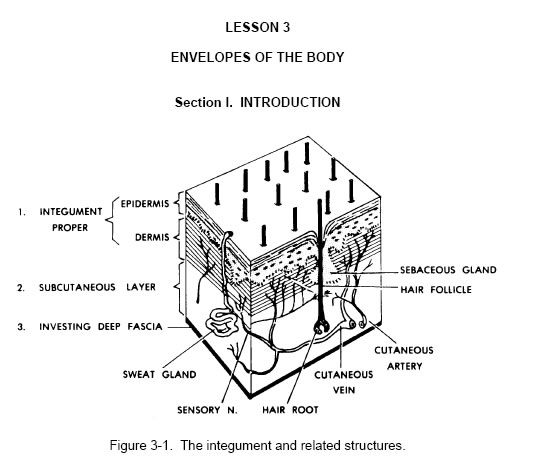
  • Lesson 3: Envelopes of the Body
  • Lesson 4: The Skeletal System
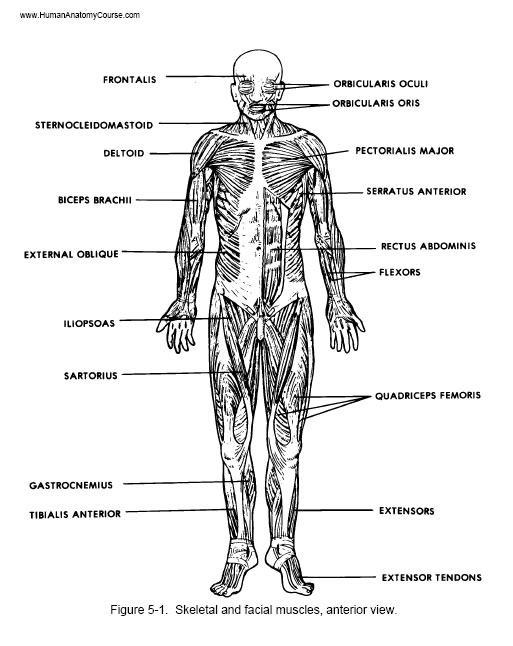
  • Lesson 5: Physiology and Actions of Muscles
  • Lesson 6: The Human Digestive System
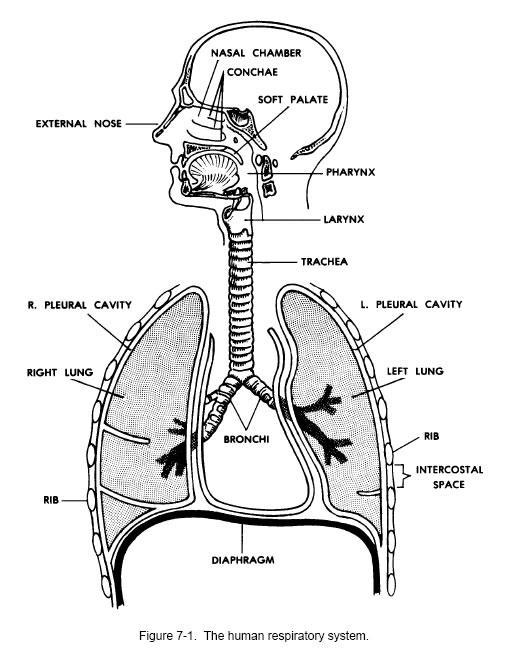
  • Lesson 7: The Human Respiratory System and Breathing
  • Lesson 8: The Human Urinary System
  • Lesson 9: The Human Reproductive (Genital) System
Human MusclesDigestive SystemRespiratory System
Click On Each Image To Zoom In
  • Lesson 10: Cardiovascular and Other Circulatory Systems of the Human Body
  • Lesson 11: The Human Endocrine System
  • Lesson 12: The Human Nervous System
  • Lesson 13: The Special Senses
  • Lesson 14: Some Elementary Human Genetics
  • Ear-Eyes-Nose Injuries
  • Musculoskeletal System
  • Nursing Care Related to the Musculoskeletal System
  • Anatomy and Physiology Related to Clinical Pathology
  • AND MANY MORE! (over 3000+ PAGES with full illustrations)


What this boils down to is that you're getting the most comprehensive human anatomy & physiology course available. This leaves no stone unturned.
Remember, this is just ONE module out of the hundreds in this component. It is simply too huge to list them all.


System Component #2:
Drug Dosage,Therapy & Pharmacology ($397.00 Value)


Pharmacology continues to be among the most dynamic of the biomedical sciences and as such, it included as a component in this amazing home study course.
  • Drug Dosage and Therapy
  • Oral and Maxillofactal pathology
  • Pharmacology I
  • Pharmacology II
  • Principles of Epidemiology and Microbiology
  • AND MANY MORE! (over 3000+ PAGES with full illustrations
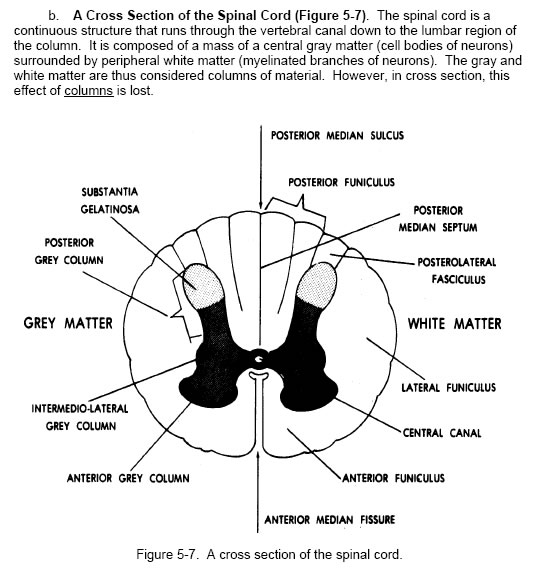
Spinal CordLarynx PhysiologyEvelopes of The Body
Click On Each Image To Zoom In

Frankly, I didn't even delve into the details of every single module as I do not want to overwhlem you.
You'll find out about drugs affecting the central nervous system, autonomic and cardiovascular drugs, drugs used to prevent and treat infections, lymphatic systems, cardiac and vasodilator drugs and so much more.
Let me tell you, though, that what I've shown here is VERY conservative in number. The actual contents of this course is jam packed with a gargantuan amount of knowledge that has been scrupulously researched.

This tome of knowledge is right there...just waiting for you to open ...


System Component #3:
Detailed Illustrations Graphics Pack ($297.00 Value)

Learn How to Read Music
LIST OF ILLUSTRATIONS
1-1 Regions of the human body
1-2 Anatomical position and medial-lateral relationships
1-3A The sagittal plane
1-3B The horizontal plane.
1-3C The frontal plane .
1-4 A "typical" animal cell (as seen in an electron microscope)
1-5 Planes of the body (exercise 14)
1-6 Directions (exercise 15).
1-7 Directions upon members (exercise 16).
1-8 A "typical" animal cell (exercise 18).
2-1 Epithelial cells.
2-2 Types of epithelial tissues
2-3 Types of muscle tissue
2-4 A neuron.
2-5 A synapse
3-1 The integument and related structures.
3-2 The integumentary derivatives (appendages)
3-3 A bursa--the simplest serous cavity
4-1 A mature long bone (femur)
4-2 A "typical synovial joint"--diagrammatic
4-3A Anterior view of the human skeleton
4-3B Posterior view of the human skeleton
4-4 A typical vertebra (superior and side views)
4-5 The human thorax with bones of the shoulder region
4-6 The human skull (front and side views)
4-7 A general pattern of the upper and lower members
4-8 The human scapula and clavicle (pectoral girdle)
4-9 The humerus, radius, and ulna
4-10 The human hand
4-11 The bony pelvis (two pelvic bones and sacrum).
4-12 The femur, tibia, and fibula (anterior views)
4-13 The human foot
5-1 Skeletal and facial muscles, anterior view.
5-2 Skeletal and facial muscles, posterior view
5-3 Types of lever systems
5-4 A simple pulley (the human knee mechanism)
5-5 The skeleto-muscular unit (arm-forearm flexion (3rd class lever system))
6-1 The human digestive system
6-2 Anatomy of the oral complex.
6-3 Section of a tooth and jaw.
7-1 The human respiratory system
7-2 Supralaryngeal structures.
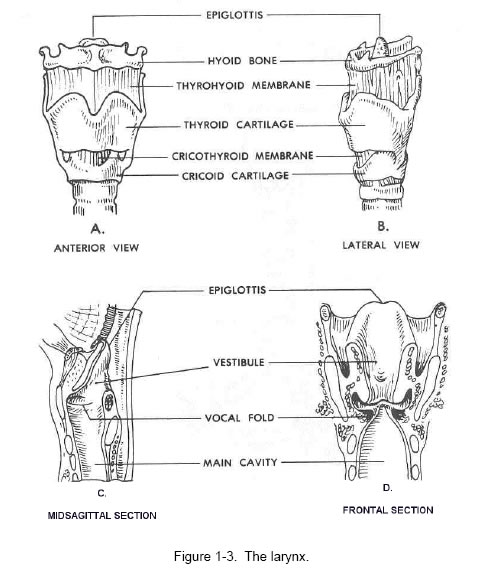
7-3 The larynx.
7-4 Infralaryngeal structures ("respiratory tree")
8-1 The human urinary system.
8-2 A section of a human kidney
8-3 A "typical" nephron
8-4 The human female genital system
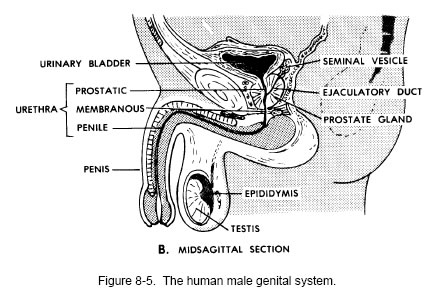
8-5 The human male genital system (continued) .
9-1 Scheme of blood vessels
9-2 The human heart..
9-3 Scheme of heart valves.
9-4 Cardiovascular circulatory patterns
9-5 Main arteries of the human body
9-6 Main veins of the human body
9-7 The human lymphatic system
10-1 The endocrine glands of the human body and their locations..
11-1 A "typical" neuron .
11-2 A synapse
11-3 A neuromuscular junction.
11-4 The human central nervous system (CNS) .
11-5A Human brain (side view).
11-5B Human brain (bottom view)
11-6 A cross section of the spinal cord.
11-7 A schematic diagram of the meninges, as seen in side view of the CNS
11-8 A "typical" spinal nerve, with a cross section of the spinal cord
11-9 The general reflex arc
11-10 A horizontal section of the eyeball
11-11 Cellular detail of the retina.
11-12 A frontal section of the human ear
11-13 The labyrinths of the internal ear.
11-14 Diagram of the scalae
11-15 Diagram of semicircular duct orientation ..
Genital System
Click On Each Image To Zoom In
If you're a student or researcher, these diagrams would be a lifesaver.
The good news is, you pretty much don't have to do any work at all. All the hardwork has been extensively done for you. These comprehensive illustrations are all detailed and labelled.
This is like having your own walking human encyclopedia.
  
Cells and Tissues | Skeletal | Muscular | Digestive | System | Respiratory | Urinary | Reproductive | Cardiovascular | Endocrine and Nerves | Human Genetics and Senses
+
Drug Dosage and Therapy | Oral and Maxillofactal Pathology |
Pharmacology | Epidemiology | Microbiology

 
 AWARD WINNING HOME STUDY COURSE AS SEEN ON THE MARTHA STEWART SHOW!


Human Anatomy & Physiology Home Study Course
 Hundreds of Medical Topics Covering Everything You Want To Know.

 Over 3000 Pages With Illustrations + Lesson Quiz & Solutions


A treasure tome of knowledge usually only sold to medical professionals

The Essential Home Study Course that comes with tests and solutions

For Professionals, Students, Nurses, Educators, Trainers, Anatomist, Paramedics or Researchers

Compatible With All Computers (Macs and PCs)

PDF Printable (Just Print and Take it With You)
 
See why I call this the "ultimate" home study course? But you know, I'm going to make it even easier...

And here's what I haven't told you...for the next 100 27 members only:


A Sizzling Exclusive Bonus Is Yours To Download FREE
-  When You Become A Member Immediately!


As if that's not enough, you'll also be glad to know that I'm throwing in an time limited bonus.

"Nursing & Paramedics Masterclass" is an exclusive course that covers all the fundamental materials ways to get started in the industry, even if you're new to this. As always, it contains detailed images and illustrations to guide you step by step along the way.
This is only available to the next 100 27 members only so download it now before it's gone!
 
BONUS: Nursing & Paramedics Masterclass

Heart Attack and Cardiopulmonary Resuscitation
Rescue Ops: Initiate Rescue Breathing & Remove An Airway Obstruction On An Adult or Child
Eye, Ear Nose Injuries & How To Treat Them
Surgical & Sterlie Dressing and Procedures
Nursing Fundamentals I, II & III
Nursing Care : Musculoskeletal System and Respiratory
Medical Mycology Overview & Introduction Course
And Many More Not Listed ...
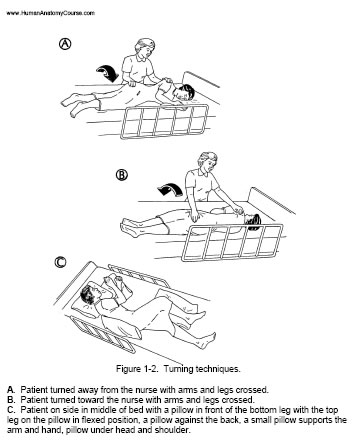
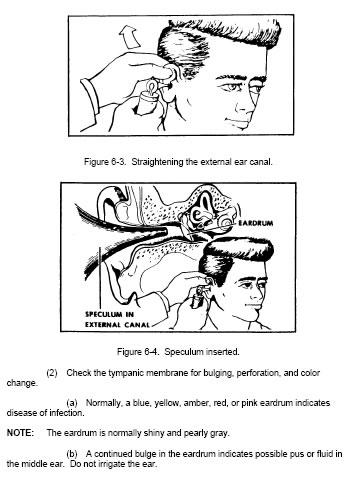
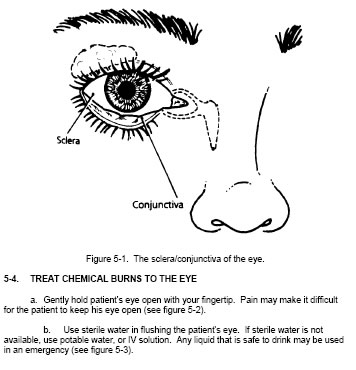
Nursing and ParamedicEar Infection NursingEye Chemical Burning Treatment
Click On Image To Enlarge
That's right, I'll give you everything you'll ever need to know about nursing, paramedics and EMT.
Before you become a paramedic, you will have to become an emergency medical technician - basic (EMT-B). Paramedic training takes 18 - 24 months and cost up to $10,000 depending on where you live.

I'll walk you through everything you need to learn, and connect all the dots for you.
Yes, I'll provide you with the course materials, lessons, tests and quizzes that my students have paid thousands for. This has got to make this the easiest, most value for money course you've ever seen. No doubt about it...
What Our Satisfied Customers Have To Say ...
I realize that for some, all of this might sound too good to be true. For those that automatically think this is too good to be true, I know I can't just say, "trust me... it is true".While it's sad that the internet has become a place like that, I don't blame you one bit. In fact, I'm exactly the same. I need proof. I need to see and hear from real people that are currently doing what I want to be able to do.
So, for the skeptics out there, here's more proof straight from the "horses mouth". All 100% unsolicitated.


" I'm thoroughly impressed.
Highly recommended!
.
"

"The illustrations and extensive lesson plans have been invaluable.
It has provided me with a one-stop educational solution as a student. Where was this 2 years ago when I first started!"

I'm thoroughly impressed. Highly recommended!"

Rachel Kaushik
UNCW School Of Nursing

North Carolina

" If you are a practitioner, don't walk. Run and pick this up..."

"There are a lot of good reasons to buy James’s latest product. But the thing that really jumped out at me is the depth and quality of all the modules.
If you're a practitioner or you're in the medical field,

get this product. Don't walk...run and pick this up before James comes to his senses and stops selling this. No ifs, no ands, no buts. Just get it."

Dr. William Crawford
Medical Practitioner
Sausalito, CA


Get Instant Access To The Member's Area Now!


Background Dr.James Ross

Dr.James Ross served as Managing Director of British Petroleum Company PLC since 1991 and joined it in 1962. Mr. Ross served as Managing Director of Cable & Wireless PLC from 1992 to 1995. He served as Chief Executive and President of BP America Inc. and its Managing Director since 1991 and joined it in 1959. He served as Chief Executive of Cable and Wireless PLC. from 1992 to 1995. Mr. Ross served as Chairman of the Littlewoods PLC from 1996 to 2002. He served as Chairman of National Grid PLC from 1999 to 2002 and served as its Deputy Chairman from March 1999 to October 21, 2004. He served as Non-Executive Deputy Chairman of National Grid Transco of National Grid PLC (formerly, National Grid Transco plc) until October 21, 2004. Mr. Ross has been a Non Executive Director of Prudential PLC since May 6, 2004. He has been a Corporate Director of Schneider Electric SA since 1997. He serves as Non-Executive Director of McGraw-Hill Inc. and Datacard Inc. Mr. Ross served as Senior Independent Non-Executive Director of Prudential PLC from May 6, 2006 to January 1, 2011. He served as Senior Independent Director of Jackson National Life Insurance Company until January 1, 2011. He served as an Independent Member of Supervisory Board of Schneider Electric SA to October 19, 2010. Mr. Ross served as an Independent Non-Executive Director of National Grid PLC from March 1999 to October 21, 2004. He also served as Director of National Grid Transco until October 21, 2004. He serves as Chairman of the Leadership Foundation for Higher Education. Mr. Ross graduated from Oxford University with an honors Degree in Modern History and has a Diploma (with distinction) in Advanced Studies in Business Management from Manchester Business School.